
Key Takeaways
- Manaslu Circuit Trek is the best all-round choice: shorter (14–18 days), more affordable, culturally rich, and ideal for your first restricted-area trek.
- Kanchenjunga Circuit Trek is for experienced trekkers: longer (20–24 days), more remote, physically tougher, and offers true wilderness with very few crowds.
- Logistics and cost differ significantly: Manaslu is easier to access by road and costs much less, while Kanchenjunga requires flights, buffer days, and roughly double the budget.
- Choose based on your priority: go Manaslu for balance, culture, and value; choose Kanchenjunga for isolation, challenge, and a rare expedition-style experience.
Table of Contents
Torn between the Kanchenjunga Circuit and the Manaslu Circuit? You’re asking the right question and it’s not as simple as “which is better.” These two treks serve completely different types of trekkers, and choosing the wrong one can mean the difference between a trip you love and one that leaves you underprepared.
Both routes are among Nepal’s finest restricted-area treks. Both require permits, a licensed guide, and solid mountain experience. But that’s roughly where the similarities end.
This guide breaks down every key difference: difficulty, cost, scenery, culture, logistics, and who each trek is actually right for so you can make a genuinely informed decision.
The Short Answer: Which Trek Is Right for You?
Choose the Manaslu Circuit Trek if you:
- Have 14–18 days available
- Want a strong mix of mountain views, cultural villages, and varied terrain
- Prefer teahouse trekking with reliable infrastructure
- Are doing your first restricted-area trek in Nepal
- Want good value for money with straightforward logistics
Choose the Kanchenjunga Circuit Trek if you:
- Can commit 20–24 days (plus buffer days for travel delays)
- Crave genuine wilderness and solitude with fewer than 1,500 trekkers per year on the trail
- Have already completed a major Nepal high-altitude trek like EBC or Manaslu
- Don’t mind higher costs and more complex logistics in exchange for a rawer experience
- Want a trek that still feels truly undiscovered
In one line: Manaslu = balance, culture, and value. Kanchenjunga = isolation, wilderness, and depth.
At a Glance: Kanchenjunga Circuit vs Manaslu Circuit
| Feature | Manaslu Circuit Trek | Kanchenjunga Circuit Trek |
| Duration | 14–18 days | 20–24 days |
| Distance | ~177 km | ~200–270 km |
| Max Altitude | 5,160m (Larkya La Pass) | 5,143m (Pangpema, North Base Camp) |
| Annual Trekkers | ~8,000+ | ~1,500 |
| Difficulty | Challenging | Very Challenging |
| Teahouse Quality | Good | Basic |
| Access from Kathmandu | 8–10 hr drive | Flight + jeep ride |
| Permit Cost | ~$100–$130 (peak season) | Higher (restricted area) |
| Cost (all-inclusive) | ~$1,200–$1,500 | ~$2,178–$2,989 |
| Best For | First restricted-area trekkers | Experienced adventurers |
Overview: What Are These Treks?
Manaslu Circuit Trek
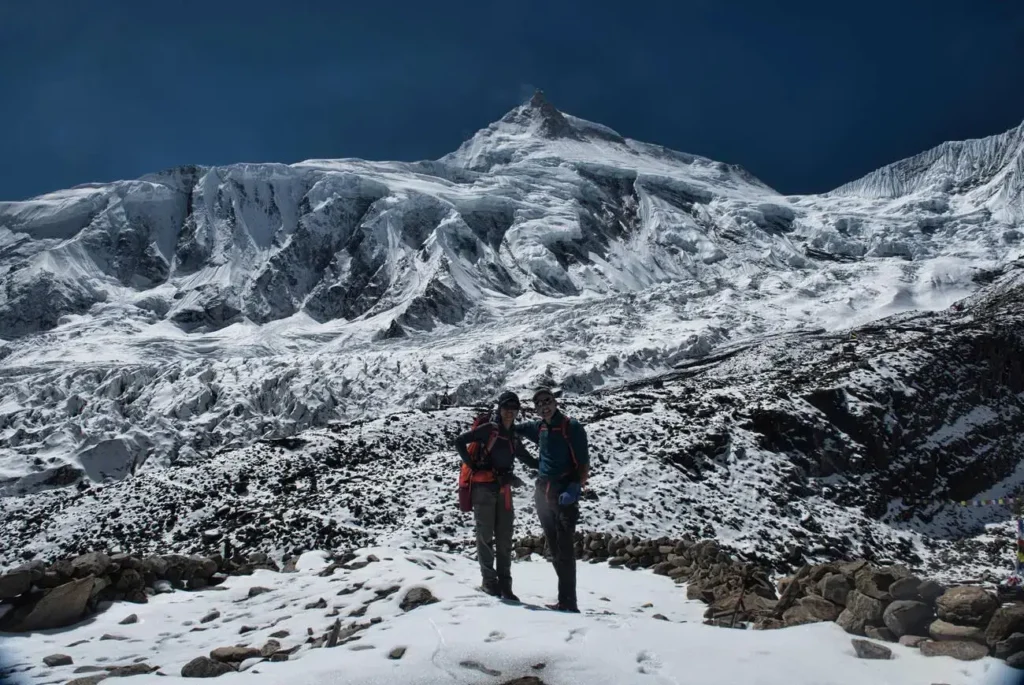
The Manaslu Circuit loops around Mount Manaslu (8,163m) the world’s eighth-highest peak in Nepal’s Gorkha district. The route follows the Budhi Gandaki River valley before climbing to the dramatic Larkya La Pass (5,160m) and descending into Annapurna territory.
What makes it work so well is its variety. In a single trek, you move through subtropical river valleys, ancient Tibetan Buddhist monasteries, terraced hillsides, glacial moraines, and high alpine passes. Culturally, it transitions from Hindu-influenced middle hills in the lower sections to Tibetan Buddhist communities in the upper Manaslu region making it one of Nepal’s most culturally layered treks.
It was opened to foreign trekkers in 1991 and remains a restricted area, which keeps it significantly quieter than Everest and Annapurna while still offering dependable teahouse infrastructure.
Kanchenjunga Circuit Trek
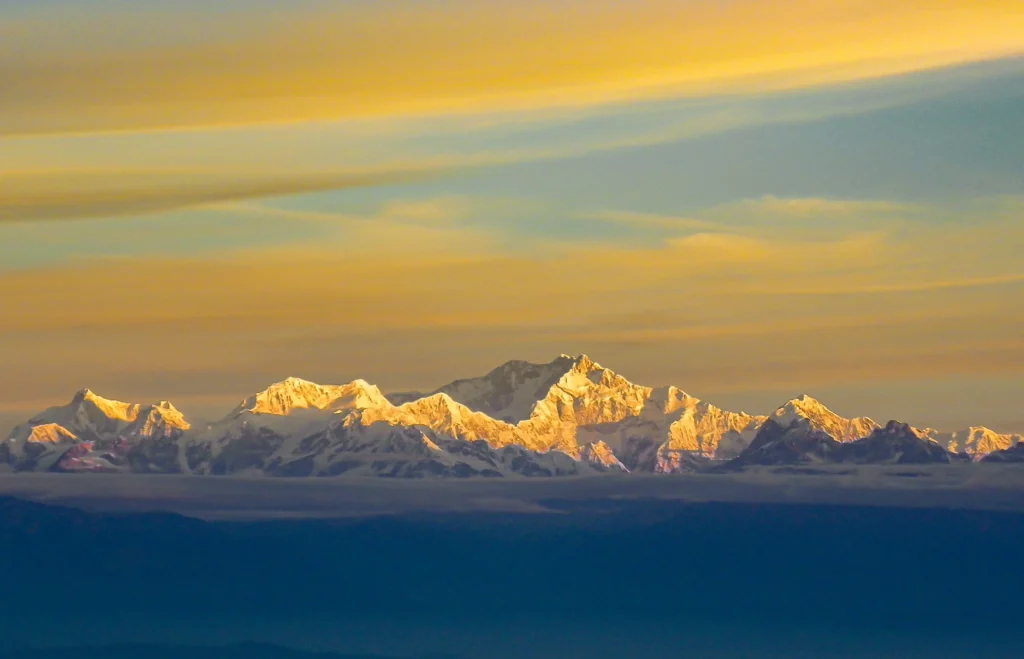
The Kanchenjunga Circuit explores the region surrounding Mount Kanchenjunga (8,586m) the world’s third-highest peak in Nepal’s far eastern corner. Unlike a standard out-and-back route, the full circuit visits both the North Base Camp (Pangpema, 5,143m) and South Base Camp (Oktang, 4,730m), connected via the high Sele La pass traverse.
This is one of Nepal’s most remote and least-visited major treks. The trail passes through four distinct cultural zones, from Limbu and Rai communities in the lower valleys to Tibetan Buddhist villages like Ghunsa and Kambachen at higher elevations. Infrastructure is basic compared to Manaslu, and the sheer distance from Kathmandu means logistics require careful advance planning.
The reward? A Himalayan journey that genuinely feels like an expedition wild, quiet, and deeply memorable.
Accessibility and Getting There
This is one of the starkest practical differences between the two treks.
Manaslu starts with a straightforward, if long, road journey from Kathmandu to Soti Khola or Machha Khola typically 8–10 hours by bus or jeep. Road access is generally reliable, making logistics predictable and delays uncommon. You can be on trail within a day of arriving in Kathmandu.
Kanchenjunga is significantly harder to reach. Depending on your itinerary, getting to the trailhead involves a domestic flight plus a long jeep ride and weather-related flight cancellations are a real risk in eastern Nepal. Most trekking operators strongly recommend building at least 2–3 buffer days around the start and end of the trek for transport delays alone.
If smooth logistics matter to you, Manaslu has a clear edge. If reaching a truly remote region is part of the appeal, Kanchenjunga’s relative inaccessibility is part of what makes it feel so rewarding.
Duration: How Much Time Do You Need?
Manaslu Circuit: 14–18 days for the standard route. Adding the Tsum Valley side trek (one of Nepal’s most culturally rich detours) extends this to 20–22 days for those with more time.
Kanchenjunga Circuit: 20–24 days for the full circuit and that’s after you’ve arrived at the trailhead. Including travel to and from Kathmandu, most trekkers should plan for 26–28 days total. Weather delays, rest days at altitude, and the sheer scale of the route make a generous itinerary essential, not optional.
Bottom line: If you have two to three weeks, Manaslu fits comfortably. Kanchenjunga demands a full month’s commitment and rewards those who can give it one.
Difficulty: Which Trek Is Harder?
Both treks are serious undertakings. Neither is suitable for beginners. But they challenge you differently.
Manaslu is demanding primarily at Larkya La Pass (5,160m), where long walking days, cold temperatures, and altitude combine on crossing day. The rest of the route is challenging but manageable for trekkers with a reasonable fitness base and some prior Himalayan experience. Most experienced sources classify it as the right stepping stone before Kanchenjunga.
Kanchenjunga is harder across the board. The circuit covers more distance (200–270 km), spends more consecutive nights above 4,500m, and offers far fewer exit options if conditions deteriorate or health becomes an issue. The Sele La traverse the route’s defining high-pass crossing is technically demanding. Cumulative fatigue over 17–18 consecutive walking days with no resupply town is a real factor. Most reputable operators list prior completion of EBC, the Annapurna Circuit with Thorong La, or the Manaslu Circuit as a prerequisite not a suggestion.
One critical practical note: helicopter evacuation from the Kanchenjunga zone costs $5,000–$15,000 depending on aircraft availability and pickup location, making comprehensive travel insurance with adequate coverage non-negotiable.
Scenery: What Will You Actually See?
Both treks are visually spectacular but they offer very different kinds of beauty.
Manaslu delivers constant scenic variety. The landscapes shift from lush subtropical forest in the lower Budhi Gandaki valley to pine and rhododendron forest at mid-altitude, then to open alpine terrain and glacial landscapes above Sama Gaun. Larkya La Pass rewards with panoramic views of Manaslu, Himalchuli, Ngadi Chuli, and the Annapurna range. The blend of dramatic mountains and traditional villages makes every waking day feel visually rich.
Kanchenjunga offers something wilder and more elemental. Rhododendron forests in full spring bloom, sweeping alpine meadows, glaciers descending from Kanchenjunga’s flanks, and vast empty valleys with almost no one else in sight. The mountain itself, the third-highest on Earth, is a dominant presence throughout the upper circuit. With barely 1,500 trekkers per year on trail, the landscapes feel genuinely unspoiled in a way that’s increasingly hard to find in Nepal.
If you want constant scenic variety woven with cultural interest, Manaslu wins. If you want raw, uninterrupted wilderness with a sense of true remoteness, Kanchenjunga is in a different league.
Culture: Which Trek Has More to Offer?
Manaslu is widely regarded as one of Nepal’s most culturally immersive treks. The trail moves through a clear cultural progression Gurung villages in the lower sections, then Tibetan Buddhist communities in the upper Manaslu valley. Villages like Lho (home to Ribung Monastery), Sama Gaun, and Samdo each have their own distinct character. Monks chanting in centuries-old gompas, yak butter tea shared by the fire, prayer flags snapping in the alpine wind, cultural moments are woven into the daily rhythm of the trek, not scattered between long wilderness stretches.
Kanchenjunga compensates with remarkable ethnic diversity. The lower valleys pass through Limbu and Rai communities known for their warm hospitality, traditional dance, music, and harvest festivals like Chasok Tangnam before the upper trail enters Tibetan Buddhist territory in Ghunsa and Kambachen. The cultural encounters are genuine and deeply interesting, but they are more sparse; much of the trek covers remote terrain between villages rather than moving through a continuous cultural landscape.
For cultural depth and continuity: Manaslu leads. For ethnic diversity and rarity of encounter: Kanchenjunga is unmatched.
Cost: What’s the Budget Difference?
This is significant, and worth being specific about.
Manaslu Circuit Trek typically costs $1,200–$1,500 per person for a full guided package (14–16 days, all-inclusive). Permits run approximately $100–$130 per person during peak season (the Restricted Area Permit plus MCAP and ACAP). Road access from Kathmandu keeps transport costs low public buses cost $15–20; private jeeps for a group run $250–300.
Kanchenjunga Circuit Trek runs $2,178–$2,989 per person for a 22-day all-inclusive package. Flight tickets to the eastern trailhead, limited ground transport, and food costs that run roughly 30% higher than Manaslu all push the price up. Guide fees for an 18–22 day trek ($540–$1,080) and porter costs ($360–$630) are also higher simply because of the duration.
Total cost difference for a typical trekker: Kanchenjunga costs roughly twice as much as Manaslu. If budget is a meaningful constraint, Manaslu delivers outstanding value. If you’ve been saving for a once-in-a-lifetime wilderness trek and cost is secondary, Kanchenjunga justifies every dollar.
Permits and Regulations
Both treks are restricted-area routes. Solo trekking is prohibited in both regions; a government-licensed guide through a registered agency is legally mandatory.
Manaslu requires three permits: the Restricted Area Permit (RAP), the Manaslu Conservation Area Permit (MCAP), and the Annapurna Conservation Area Permit (ACAP) the last required because the standard route exits into Annapurna territory. The permit process is well-established and straightforward through any reputable agency.
Kanchenjunga requires the Restricted Area Permit and the Kanchenjunga Conservation Area Permit (KCAP). Because the region borders both Tibet and India, the permit process is slightly more sensitive and requires more advance planning. That said, any experienced Nepal trekking agency handles this routinely.
Practical note: start permit arrangements at least 4–6 weeks before departure for either trek, and earlier for Kanchenjunga.
Best Time to Trek
The ideal windows are the same for both:
- Autumn (September–November): The single best season. Crystal-clear skies, stable weather, and trails in excellent post-monsoon condition. October is the peak season for both routes.
- Spring (March–May): The second-best option. Rhododendrons in bloom at lower elevations, warming temperatures, and generally reliable conditions at altitude.
Avoid: the monsoon (June–August), when trails become dangerous, and winter (December–February), when high passes are often buried in snow.
One important difference: Kanchenjunga’s greater remoteness means weather disruptions hit harder. A two-day flight delay at the start and a two-day weather hold in the mountains can derail an itinerary with no buffer. Build at least 3–4 contingency days into any Kanchenjunga itinerary. Manaslu trekkers can afford to be slightly more relaxed given its road access and easier exit options.
Which Trek Is More Rewarding?
The honest answer is that this depends entirely on what you mean by “rewarding.”
Manaslu rewards you with completeness. A Manaslu trek feels like a full Himalayan experience of cultural richness, dramatic mountain scenery, physical challenge, and genuine remoteness delivered in a package that doesn’t demand every resource you have. It’s a trek that most serious trekkers will leave feeling deeply satisfied by.
Kanchenjunga rewards you with rarity. With 1,500 trekkers a year on a trail that approaches the world’s third-highest mountain through four distinct cultural zones, it offers something that almost no other major Nepal trek can match: the genuine feeling of wilderness. You will spend days without seeing another trekking group. That sense of space is becoming increasingly hard to find in the Himalayas and in Kanchenjunga, it’s still very much intact.
Our honest recommendation: For most trekkers including experienced ones doing their first restricted-area route Manaslu is the stronger all-round choice. For those who’ve already done EBC or Manaslu and are ready for something wilder and more deeply challenging, Kanchenjunga is worth every extra day and dollar.
Final Verdict
| Your priority | Best choice |
| First restricted-area trek | Manaslu |
| Tighter budget | Manaslu |
| Limited time (under 20 days) | Manaslu |
| Cultural immersion | Manaslu |
| Solitude and wilderness | Kanchenjunga |
| Prior high-altitude experience | Kanchenjunga |
| Epic, expedition-style journey | Kanchenjunga |
| Maximum challenge | Kanchenjunga |
There is no wrong choice here, only the wrong choice for you. Manaslu delivers one of Nepal’s finest trekking experiences in a well-structured, culturally rich, and logistically manageable form. Kanchenjunga delivers one of the Himalayas’ last great wilderness adventures, for those ready to earn it.
Frequently Asked Questions
Is Kanchenjunga harder than Manaslu?
Yes, in most practical respects. Kanchenjunga is longer, more remote, more physically demanding over a sustained period, and offers fewer safety exits if problems arise. Most experienced operators recommend completing Manaslu or EBC before attempting Kanchenjunga.
Which trek has better mountain views?
Manaslu offers a more continuous variety you’re rarely far from mountain views and they change as the landscape shifts. Kanchenjunga’s views are rawer and more dramatic at the high points, but you cover more remote terrain between them. Both are genuinely spectacular.
Which trek is more affordable?
Manaslu, significantly so. The typical cost difference is roughly $800–$1,500 per person, driven by Kanchenjunga’s longer duration, flight access, and higher daily costs in a remote region.
Can I do Kanchenjunga as my first major Nepal trek?
It’s not recommended. Most reputable operators require prior high-altitude experience (above 4,000m) and at least one major Nepal circuit EBC, Annapurna with Thorong La, or Manaslu before attempting Kanchenjunga. This is for your safety, not just a formality.
Which trek is better for experiencing local culture?
Manaslu provides a more continuous cultural experience, with traditional Gurung and Tibetan Buddhist villages woven throughout the route. Kanchenjunga has greater ethnic diversity (Limbu, Rai, Sherpa, Tibetan), but cultural encounters are more spread out between longer wilderness stretches.
When is the best time for both treks?
Autumn (September–November) is ideal for both, with October generally considered the peak month. Spring (March–May) is the second-best window. Avoid the monsoon and winter for both routes.